

Radikales Umdenken bei HPV-Testung gefordert
Dass das Humane Papilloma-Virus (HPV) hauptverantwortlich für die Entstehung von Gebärmutterhalskrebs ist, steht wissenschaftlich außer Frage. Wie allerdings das Screening auf HPV-Dysplasien und Zervixkarzinome vonstattengehen soll, hierin scheiden sich die Geister, zumindest noch in Österreich.
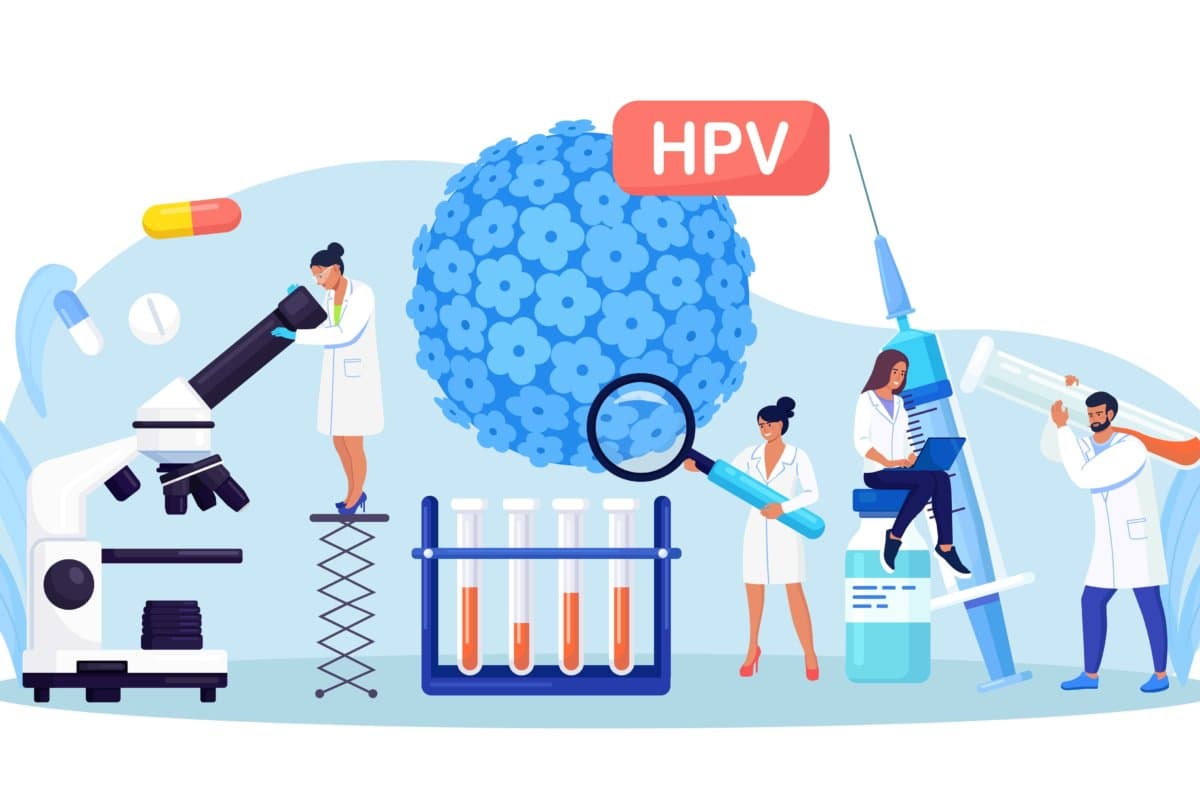
buravleva_stock/AdobeStock
Denn in Österreich wird für alle Frauen ab dem 20. Lebensjahr ein jährlicher PAP-Abstrich empfohlen. Eine HPV-Testung sollte ab dem 30. Lebensjahr zumindest alle drei Jahre durchgeführt werden, unabhängig davon, ob die Person HPV-geimpft ist oder nicht, so die Empfehlungen der Österreichischen Krebshilfe.
Referenzen
- Dillner J et al.: Long term predictive values of cytology and human papillomavirus testing in cervical cancer screening: joint European cohort study. BMJ 2008; 13:337:a1754. doi: 10.1136/bmj.a1754.
- Ronco G et al.: Efficacy of HPV-based screening for prevention of invasive cervical cancer: follow-up of four European randomised controlled trials. Lancet 2014 Feb 8; 383(9916):524–32. doi: 10.1016/S0140-6736(13)62218-7.
- Hillemanns P et al.: Prevention of Cervical Cancer: Guideline of the DGGG and the DKG (S3 Level, AWMF Register Number 015/027OL, December 2017) – Part 1 with Introduction, Screening and the Pathology of Cervical Dysplasia. Geburtshilfe Frauenheilkd 2019; 79(2):148–159. doi: 10.1055/a-0818-5440.
- Polman NJ et al.: Performance of human papillomavirus testing on self-collected versus clinician-collected samples for the detection of cervical intraepithelial neoplasia of grade 2 or worse: a randomised, paired screen-positive, non-inferiority trial. Lancet Oncol 2019; 20(2):229–238. doi: 10.1016/S1470-2045(18)30763-0.